
Like a hit song being played on all the radio stations the word sustainability can be heard everywhere, but how many people are bopping along to the beat without knowing what it means.
Sustainability is meeting the needs of the present without compromising the ability of future generations to meet their own needs. This definition was taken from the United Nations Brundtland report of 1987.
A sustainable lifestyle (people) involves changes in our daily activities, how we commute daily, and how we consume food are just two examples. When the topic of transportation is brought up most people would say switch to electric-powered vehicles, but in reality, this only makes sense if renewable energy solutions are powering the charging stations. Carpooling, public transport, walking, or riding a bicycle can all reduce vehicle emissions.
When it comes to food we need to reduce wastage, buy only what we need and eat local products when ever possible. How often do we buy foodstuff in bulk only to throw it out as waste a couple of weeks later? Have you ever considered the amount CO2 emissions generated to bring your favourite imported food products to your table?
A sustainable lifestyle would encourage the use of sustainable products (consumer goods). Products can be made to last longer. The story of the light bulb industry in the 1900s is a testament to this statement. The original bulb lasted extremely long because of the carbon filament. One of these bulbs can still be found illuminating a fire station located in Livemore California. The bulb’s longevity hampered the industry’s profitability. The manufacturers (Phoebus Cartel) got together and agreed to designed the light bulb with a defined life expectancy of 1000 hours.
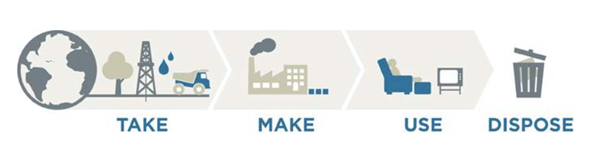
A successful business grows its revenue continuously. Modern companies frequently produce newer models of their products that are made from cheaper materials, do not have repair options, and have planned obsolescence. Using social media platforms and their influencers, businesses convince the consumer that they need to upgrade to a newer model.
However, there are companies looking to change this linear economic business model to a circular model.
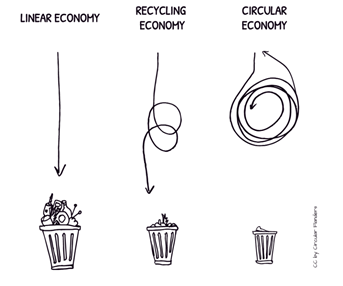
The phone brand Fairphone has both a modular design and open-source access that allows the user to upgrade their device. More than 40 % of its components are made from recycled materials allowing the phone to stay in use longer. Another manufacture is Evergreen a headphone/earbud manufacturer. The headphone is something most of us own. Its lifespan is sometimes reduced because the cord continuously gets tangled in various objects severing the connectivity between the music source and the earbuds. Evergreen has a modular product that allows the user to replace damaged cords or earbuds delaying the product’s journey to the landfill.
Lorem ipsum dolor sit amet, consectetur adipiscing elit. Ut elit tellus, luctus nec ullamcorper mattis, pulvinar dapibus leo.
- Eng.Kevin Phillip Grant Sr.MIEEE, MAPETT